

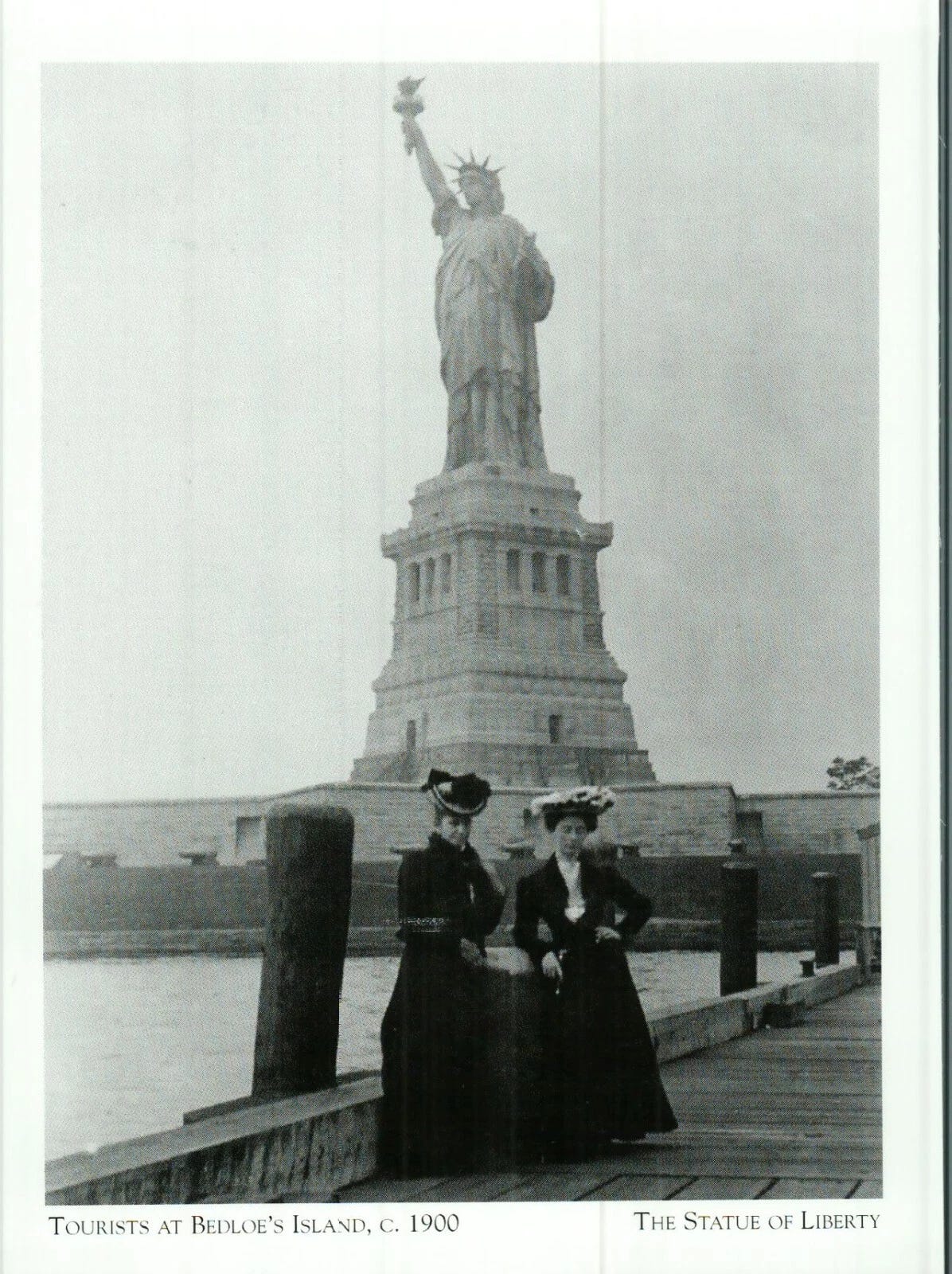
I.
I don’t remember much of junior-year U.S. History, but I remember learning about the Know-Nothing Party.
The Know-Nothings only rated about two paragraphs in our textbook (Alan Brinkley’s American History: A Survey), but those paragraphs stood out. The Know-Nothing Party first arose as a loose federation of anti-immigrant secret societies, mostly in the late 1840s. In 1850, they united to form the Supreme Order of the Star-Spangled Banner, which (among other things) required its members to deny all knowledge of party activities. (They would instead say, “I know nothing,” hence the nickname.)
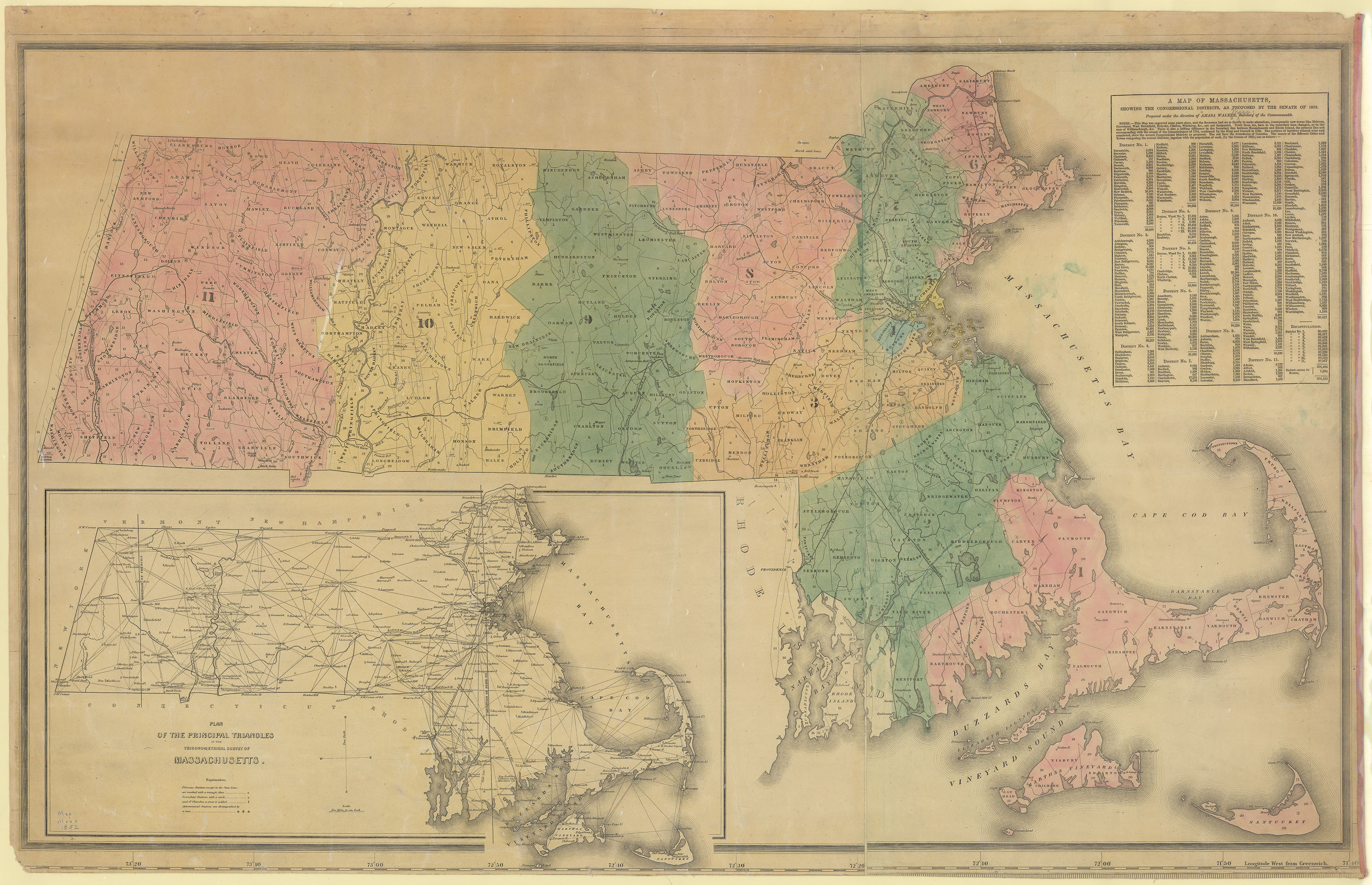
They entered national politics around the same time, dubbing their political wing the “American Party.” This brand-new party had a huge impact on the 1852 and 1854 elections. Know-Nothings swept into power in Massachusetts and won House seats sprinkled throughout North and South. In 1856, they won 20% of the presidential vote running Millard Fillmore, an ex-president. This would be something like Hillary Clinton running against Obama in 2008 on the Green Party ticket.
Then, practically overnight, the Know-Nothings collapsed over the Slavery Question.1
The Know-Nothings hated immigrants, Catholics, and the Irish, and they had no other views whatsoever. Even after their party collapsed, nativism (which had arisen out of nowhere in the 1840s and 1850s) remained a potent force in American politics for the next 70 years or so.2 It was not until the 1920s that the children of the Know-Nothings finally started to fade into irrelevance.
I thought they were insane.
These guys had built their whole identities around hating immigrants. How was this possible? I was a rule-of-law conservative, so I had serious concerns about illegal immigration. But the immigration that got the Know-Nothings out of bed in the morning was perfectly legal! I marveled. How could one even complain about legal immigrants? Why would anyone work so hard to keep new volunteer Americans out of our great country? Weren't the Know-Nothings children of immigrants themselves? Weren't we all?
It was 2005. I could not imagine what was coming.
II.
Virtually everyone agrees that there should be some maximum on immigration.
Do you doubt this?
Imagine that you woke up tomorrow to find that the entire population of Afghanistan (pop. 50 million) had immigrated to your state overnight, and that, as a result:
Your city, town, or neighborhood now has a population 100x larger than it did yesterday, and (therefore)
99% of the people now living in your city/town/neighborhood are Afghans who did not live there yesterday.
This would cause very serious problems.
Physically, where are all these new arrivals going to live? Do they crowd into existing units? Do you suddenly have to build a whole lot more units? Do the immigrants, out of desperation, start building new housing units without a permit? Is there even enough food in town to support all these new residents?
Economically, how are they all going to get jobs? How will your city extend its existing infrastructure to provide them with standard city services, like schools and water (and possibly welfare), without a crippling budget crisis? How are you going to keep the job you already have in the economic disruption that follows this vast overnight arrival?
People tend to fixate on these challenging questions, because the answers have numbers in them, so they don’t seem too racist. However, the really hard questions don’t have numbers in them:
Socially, you are now a tiny 1% minority among a people who believes all women must wear the hijab. They mostly don’t understand, much less agree with, the American notion of pluralism. They do not even speak your language, and the majority consider your religion (be it Christian or No Religion) a second-class abomination. How do you fit into the social fabric of this new local majority?
Meanwhile, the new arrivals have imported a number of inter-tribal conflicts from their homeland (our homelands all had them, too!), which they begin to enact on your streets, Gangs of New York-style. If they didn’t have inter-tribal conflicts before, don’t worry: the upheaval of migration will cause conflicts and violence. How does that violence change the way you live? Heck, how does it change your property value?
More fundamentally, these Afghan immigrants are simply from a very different culture from yours. Even after they learn English, it is still difficult to understand their body language, their idioms, their expectations of you in daily interactions. You soon learn that the Afghan residents have never been socialized to return the shopping cart to the cart corral (they don’t have big-box marts back home), they don’t understand why they would need to, and they point-blank refuse the tiny native minority that encourages them to return the shopping cart anyway. Unfortunately, our society is founded on People Who Return The Shopping Cart. Theirs isn’t. That doesn’t make them bad members of their societies, but it will be a source of friction in ours—alongside a thousand other points of friction.
In 2001, Robert Putnam discovered that, contrary to popular corporate belief, more diverse communities tend to have lower social trust than more homogenous one. These points of friction are a likely culprit.
Local institutions that might otherwise ease these frictions and facilitate cross-cultural bonding, like churches, bowling leagues, and local non-profits, are either destroyed in the face of the upheaval, or far too small to be relevant. How do you sustain the institutions that defined your community in the wake of a tsunami? Besides, as a self-sustaining insular majority, the recent immigrants have no incentive to assimilate to your culture, and are inclined to wonder why you aren’t trying to assimilate to their culture instead.
Electorally, these new residents haven’t naturalized as American citizens yet, but they will someday, probably as soon as they can. At that point, you and everyone in your town will be outnumbered 99-to-1 by the Afghan vote. Your entire city council will certainly be replaced by Afghans. They will legislate according to Afghan values, hoping to appeal to their overwhelming Afghan constituents. When they vote to impose the hijab on all women in town, you’re going to lose that vote. Maybe a federal court will eventually step into overturn the law, maybe not, but you’re still going to lose the vote. How many of your peers will simply accept the hijab so as not to make a fuss? How many of them fear they, their families, or their homes might face retaliation if they join that lawsuit?
The priorities of your police will change, too. So will the way they enforce the law. Not to put too fine a point on it, but Afghan attitudes toward the rape of “loose women” is quite different from ours. How does that shift change local policing? How does it change your life?
I’m not making any claim here that American culture is better than Afghan culture.3 The culture that arises from massive Afghan migration to your city won’t necessarily be bad. However, it will no longer be your culture. In a hundred-fold immigration event, the culture of your neighborhood will be destroyed instantly and replaced by an entirely different culture—a new culture where you and your neighbors (now an extreme minority) will become alien, often uncomfortable, and perhaps even persecuted.
We see, then, that every community has a finite capacity to assimilate immigrants. If a community exceeds its capacity, it will strain community institutions, and natives will face genuine struggles. If a community greatly exceeds its capacity, its indigenous culture will be destroyed.
For instance, there is no community that could absorb the overwhelming wave of migration I described in Section II. Most communities would collapse at far lower immigration levels. All would feel significant strain.
That’s not because immigrants are bad people or because natives are racist xenophobes or anything. Even if every single person involved, on both sides, is a perfectly virtuous saint striving to act generously toward their guests/hosts, it’s simply impossible for the native culture to remain intact if it overshoots its assimilation capacity.
Even supporters of completely free and open borders recognize that each community has a finite capacity to absorb immigrants. They simply believe it will never arrive, since, in fact, the entire population of Afghanistan will not immigrate to your state overnight. Which is true!
III.
However, you don’t need the entire population of Afghanistan to immigrate for your community to feel the strain. Consider England. National Review’s Abigail Anthony, who lived there for two years, gave this report last December, of which I will quote only a few choice excerpts:
When I was walking through Oxford around midnight after an evening event that offered unsatisfying hors d’oeuvres, I stopped at a kebab food truck because it was the only place open en route to my apartment (and at that hour, there was no line). But I was not served: The man working there told me to come back and order once I was wearing a hijab. The remark was so unexpected that I couldn’t think of anything to say other than “okay,” and I walked home hungry and stunned. The encounter could have been grounds for a sex- or religious-discrimination case, but it was a he-said-she-said scenario, so it became only another painful anecdote about Britain’s degeneration.
…the growing resentment arises from the observation that non-European immigrants often fail to comply with basic norms, let alone thoroughly assimilate. An alarming example is that more than half — 55 percent — of British Pakistanis have married a first cousin (which has long been legal in the U.K., but formerly rare). The resulting harms can hardly be overstated: The Wellcome Trust found in 2003 that infant mortality and childhood morbidity rates were higher in British Pakistanis than in other ethnic groups, and a 2005 BBC investigation concluded that Pakistanis represent 30 percent of all British children with recessive disorders. Despite the harms that result from inbreeding, an arm of the National Health Service England suggested in 2025 that first-cousin marriage has “benefits,” and further warned against criticizing such arrangements because doing so “stigmatises certain communities…”
…Through freedom-of-information requests and subsequent analysis, the Centre for Migration Control showed that foreign nationals are arrested at twice the rate of British natives, and foreign nationals are 3.5 times more likely to be arrested for sexual offenses.
…A Kosovan cocaine dealer was not deported after the court ruled it would be “unduly harsh” on his one-year-old daughter because she is too young to participate in video calls, while a Pakistani man who was sentenced to 18 months in jail for preying on “barely pubescent girls” was allowed to remain because the judge concluded that it would be “unduly harsh for [his] children to be without their father.”
…Even the Office for Budget Responsibility has acknowledged that the average British-born worker contributes a net cumulative £280,000 to public finances by age 66, whereas each low-paid migrant (classified as earning half the average wage) costs taxpayers £151,000 by the same age.
In Oxford, where the hijab incident happened, people born outside the U.K. are only 35% of the population, not 99%.4
(Foreign-born people do, however, account for 62% of births in Oxford, so that number will change fast.)
For my part, I’ll tell just one little story:
I was at our local Six Flags park, Valleyfair, on closing night last season. I was on a date with my wife. It was our first night out without the kids in weeks. Mostly, we had a lovely time. In line for Undertakers (a haunted house), we found ourselves behind a group of Somali5 teen girls who must have never experienced a haunted house before, or possibly even heard of the concept, because they found every single thing terrifying. They screamed at the tops of their lungs, jumped about a foot in the air at every surprise, and then giggled their way to the next room while they recovered. My wife and I have done countless haunted houses and grown largely impervious to them, so their youthful innocence, their pure horror/joy, was a balm. We surreptitiously followed the Somali girls to Berserkers (another haunted house), just to see how they reacted.
That was where we lost them, unfortunately, because one of the girls was so scared by one of the actors that she either fell over or briefly passed out, and we were waved along to the next room while people in vests intervened. I don’t want to wax poetic about what amounts to my wife and I creeping on some kids having a good time without ever actually talking to them, but those girls were terrific. They encountered our culture with open hearts, and everyone gained from the exchange. It was an Immigration Yes! moment.

On the other hand, when we left Berserkers, we were told we couldn’t enter the Blood on the Boundary Waters scare zone—which was a bummer, because Blood on the Boundary Waters is pretty new, and it’s some of Valleyfair’s best scare work. Apparently, there had been an incident of some kind elsewhere at the fair, and Boundary Waters staff had to be pulled away to respond to it. We walked around to the other side of the park, where we saw very large groups of young Somali men, who did not seem to be on friendly terms with one another, and more staff pulled from other scare zones, moving quickly to unknown destinations.
I think we got one more spookhouse finished and were in line for the Renegade roller coaster when the lights came up and an announcement started. Valleyfair, abruptly closed, two hours early, ruining the rest of our date and getting us stuck in the sudden crush of parking lot traffic for over an hour. (Parking lot traffic was not improved by the large number of police that were suddenly swarming the main entrance.) It was a sad end to a good season, especially (I assume) for the hard-working scare cast.
Our institutions did the usual thing, of course. Valleyfair released a maximally bland statement explaining that “two altercations” had led to the closure. (Pretty big altercations, to require so much staff to run across the park to address it!) Police gave a statement that contained no information. Local journalists, to a man, reported the closure, printed the press releases, sought out no witnesses, asked no questions, and did no follow-up. The suspects were never publicly identified nor described. The reports were designed to anesthetize, not inform.
This silence was absolutely necessary, because, of course, the suspects were all Somalis. This was exactly the same playbook the institutions had run in 2018, when exactly the same thing happened , which came a year after almost the same thing happened. The 2017/18 incidents6 had led Valleyfair to dramatically tighten security, turning the experience of entering an amusement park into something like the TSA line at the airport, with metal detectors, strict chaperone rules, bag searches, the works. The bad behavior came from very few people, but impacted everyone… and, apparently, it still wasn’t enough.
Somali immigrant violence has also been linked to major disruptions or closures at the Mall of America, the Minnesota State Fair, and the University of Minnesota.7
These are not signs that Somalis are bad people or “scum” or whatever else angry people on the Internet say about them. Somalis are just like any other large group of people: mostly decent folk trying to make a good life for themselves and their children.
However, these are signs that parts of Minnesota’s social and economic infrastructure for assimilating immigrants may be stressed beyond capacity. As a result, things are getting worse here, for everyone. Not a lot worse, we’re not sliding into the abyss, but twenty-five years ago, Valleyfair had no curfew, no visible security… and no gang fights closing the park. The Mall of America’s curfew rules have grown a lot over the decades, and always in one direction: more secure, because the crowd in the Mall has gotten more dangerous. Those of us old enough to remember before 2005 aren’t blind. Major venue closures like this were unheard of.
The foreign-born population of the Twin Cities seven-county metro area is not even close to 99%, like in our Afghanistan hypothetical. It’s not even 35%, like in Oxford. It’s just 12%. The fact that we are experiencing some strains doesn’t mean we’ve reached our limit, but it does mean we shouldn’t just assume that we still have vast unused capacity.
IV.
Given that every community has a finite capacity for assimilating immigrants, you might expect immigration debates to be about the very specific question I’ve raised: what is our community’s capacity for assimilating immigrants, and have we reached it?
If the answer to the second question is, “No, we haven’t reached our capacity yet,” then it seems obvious, under most popular moral codes, that we ought to welcome honest, hard-working immigrants to our communities. By default, people all over the world should be free to settle where they think best for themselves and their families. The very nature of land is that it pre-exists all of us and was earned by none of us, the common patrimony of the entire human race. If we are to exclude some people from land we say is “ours,” we’d better have a very good reason for it, or we’re no better than robbers. This is doubly true in America, the great melting pot, the only nation where everyone has immigrant roots.8 It’s trebly true when people are fleeing war, chaos, or desperate poverty, and America is their best chance at survival! We owe it to the poor and suffering to do our best to help!
On the other hand, if the answer is, “Yes, we’ve hit our capacity for now,” then it seems equally obvious, under most popular moral codes,9 that the community has a right to protect its native residents from undue strain, and that the community can take action to protect its indigenous culture from erosion. This probably means restricting new immigration, if only for a little while—with the entire enforcement apparatus such restrictions depend on.
So you would expect immigration debates to mostly be dry arguments about capacity. Each disputant would come to the debate with a specific number in mind, and then the debate would be about whose number is correct. Once you know the community’s assimilation capacity, and compare that capacity to the number of immigrants the community is already assimilating, identifying appropriate immigration policies is almost trivial. If the community is well below capacity? More immigrants! Near capacity? Fewer immigrants! At capacity? No more immigrants for now!
This would not be an easy debate. Obviously, the capacity to assimilate immigrants varies from community to community. Some are more culturally open to immigration than others. Some have stronger social infrastructure, which can handle an influx. Some immigrant communities have stronger social infrastructure, too, which can make assimilation easier or harder. Native communities have an easier time assimilating immigrants from a similar culture than from a very different culture. (For example, the average Canadian has an easier time assimilating to life in America than the average Greek.) Moreover, there isn’t a single binary point where immigration flips from “no problem at all” to “big problem.” It happens gradually, and different citizens will have different tolerances for different levels of strain in different areas of life. And so on.
It isn’t necessarily simple to measure your unassimilated immigrant communities, either. Obviously, everyone who comes from a foreign country to America as an adult is an unassimilated immigrant at first. But what about someone who immigrates as a baby and never knows life anywhere but America? Is that person an immigrant, in the relevant sense, or is she culturally and economically just an American? (What about an eight-year-old? A sixteen-year-old?) What about children born in America, but they’re born into strongly self-segregated immigrant enclaves, and so are not integrated into American society? Should they count toward a community’s capacity for assimilation? Don’t they still need to be assimilated? How can you even count heads for the vague category of “unassimilated natives”?10 In this article so far, I’ve used “foreign-born share of population” as my measure, but this simple measurement misses many nuances.
The debate, then, is not just a debate about what our immigration capacity is, but about who even counts as an “immigrant” for the purposes of immigration capacity. This is a complex debate, with many defensible answers.
Nevertheless, the fact remains: every community always has a finite capacity for immigrants, so immigration debates should center on identifying our capacity and how close we are to hitting it.
That… is not quite how immigration debates work in the United States.11 Instead, the pro-immigrant camp talks about the desperate needs of immigrants and all the (genuine) benefits they bring, but never get around to arguing what their position requires: that the U.S. has a great deal of unused capacity for assimilating immigrants. The anti-immigrant camp talks about all the costs of mass immigration, but they rarely get around to arguing that the costs outweigh the benefits. When they say things like, “America’s full,” they rarely propose a level of immigration where American isn’t full.
In other words, the two camps talk right past each other.
We can do better.
First, we can admit that the question of immigration capacity exists—and that it is, in fact, one of the central questions of immigration policy.
Second, we can admit that this question has a bounded range of reasonably objective answers, which we can likely identify through study and discussion.
Third, we can do our level best to try to find at least one such answer. I’ll give you my best shot.
Let’s take it to the map!
V.

Let’s consider our peer nations: the other members of the G7. Every country is different, but the wealthy, free nations of the G7 are more like the United States than most anywhere else.
“Foreign-born residents” is still, statistically speaking, a blunt instrument, but it gives us a ballpark idea of how many immigrants each nation is assimilating, and—this is crucial—it is a statistic that every nation in the G7 actually reports. Here are the reports from our G7 peers:
There are various reasonable ways of adjusting these figures,12 but, for simplicity, I’ll use them as-is.
Germany, the U.K., and France are all in moderate-but-prolonged political crisis over their immigration levels. In each country, anti-immigration sentiment has become so strong that the most likely outcome of the next election is a far-right, anti-immigrant party becoming the largest party and/or winning the presidency.
Italy is not currently experiencing such a crisis… because they already elected far-right13 immigration hawk Giorgia Miloni in 2022. Despite intense global antipathy for incumbents, Miloni is on track to win re-election quite comfortably, unlike her counterparts in Northern Europe.
Even Japan, with its tiny foreign-born population of 3%, is experiencing immigration-related anxiety right now. I think this is evidence of how different cultures have different capacities to assimilate immigrants. It seems to me, with my limited window into daily Japanese life, that Japanese culture depends on high trust, etiquette, and conformity to social norms, much more than American or British society. This has enormous benefits. (To name one: a self-policing society doesn’t need the kind of huge police force and prison system that ours does.) However, when your society depends on deeply ingrained social norms, foreigners who don’t have that ingrained etiquette can become a problem much faster than they would in America.
The one country on this list that isn’t embroiled in some kind of immigration-related political crisis is the one at the top: Canada. High immigration levels have certainly caused political tensions up north, but, at least from my vantage point, the system has been able to handle those tensions without serious disruption. Nothing’s boiling over. The current left-wing Liberal Party government is in no serious danger, and the right-populist People’s Party of Canada stands no chance of taking power in the next election. This capacity to receive comparatively large numbers of immigrants is, frankly, impressive, and I do wonder what factors are making it work for them. This underlines what I’ve already said: there are lot of variables, and every community is different.
Excluding the outliers of Canada and Japan, though, this list suggests that nations likely start to hit capacity when immigrants make up around 10% or 20% of their national population. This seems to line up, broadly, with the experiences of many other countries.14
This is a ballpark figure and likely varies a lot between cultures (again, look at Japan and Canada!), but it gives us a starting point as we turn our eye back toward America.
VI.
I was still puzzling over the Know-Nothings in college, when I saw a version of this chart:
Seeing this chart didn’t make me agree with the Know-Nothings, but it helped me understand them.
The Know-Nothings’ heyday was 1854-1856, but they rose steadily during the late 1840s. Unfortunately, our data for the 1840s and earlier is pretty weak, but, even so, just take a gander at how steep that upward line is between 1840 and 1850! It’s reasonable to assume that the foreign-born population of the United States doubled in the span of about five years, far outpacing the social infrastructure for assimilating those immigrants into American culture.
Imagine living through that! You wouldn’t know the exact stats like we do (modern demography was not widely practiced in the 1850s) but you’d have a pretty clear idea that your country was transforming around you, and any strains on your institutions would be obvious.15 This would be especially clear in immigrant-heavy communities, where the strain on institutions would have been strongest, like Boston. Is it still surprising that the Know-Nothings won about 70% of the Boston vote in the 1854 House election, ousting incumbents throughout the state?
In 2010, when I saw this chart, I was still puzzling over the defeat of President Bush’s 2007 immigration plan. Bush’s plan provided tougher border enforcement in exchange for a “pathway to citizenship.” Illegal immigrants already in the United States who had a job could pay a nominal fine ($1,000-$2,000) for their lawbreaking, wait a number of years, and become citizens. I supported this approach, but Republican critics called it an “amnesty,” Bush couldn’t win them over, and the bill sank beneath the waves. The tougher “Gang of Eight” bill died the very same death in 2013.16
This did not make sense to me. Obviously, we had millions of illegal immigrants in our country, and that was bad, but illegal immigration wasn’t, like, murder or anything, and we were never going to deport them all,17 so there would have to be some kind of deal made. These deals seemed like pretty good ones! So why were my fellow Republicans getting so incandescently furious about them? Why did polls keep showing that Americans broadly supported impossible, traumatic, sometimes unjust mass deportations?
The chart gave me an inkling: maybe Americans outside my cozy existence at a small liberal arts university in Minnesota, far far away from the southern border, were seeing disruptions I wasn’t, feeling strains I hadn’t felt.
VII.
The next few years seemed to bear that out:
As I’ve said repeatedly, I think it’s really hard to find a definitive answer to America’s immigration capacity. There are too many variables to pin down. The definitions are vague. Our best measuring tools are coarse. America has never even seriously debated the question, preferring instead to talk past one another in slogans. We can look at Europe and say, “Okay, ballpark, our capacity is probably in the 10-20% range,” but getting to a firm number, much less a national consensus about that number, strikes me as a really, really hard job.
When I look at this chart, though, it appears that the American people have had the last laugh! Not only do the American people appear to have a number, not only is that number measurable by the incredibly blunt “foreign-born share of population” statistic, but the American people appear to have had the same number, more or less, for the past 150 years!
The number is 10%.
Whenever the foreign-born population goes above 10% (or so), a critical mass of Americans starts to vote passionately against immigrants and immigration. We might call this the “warning” zone, where politics-as-usual goes on, but a large fraction of voters starts making border control a priority.
However, when the foreign-born share of population hits 13-14%, that’s the “danger” zone. At this point, the American people get desperate and start doing crazy stuff to reduce immigration.
In the 1870s, Americans responded to a 14% foreign-born population by banning Asia. They renewed this commitment, regularly, for the next fifty years, whenever the foreign-born population threatened to tick above 14%. That’s crazy!
However, in the 2010s, when the immigrant population again reached 14%, they did something even crazier: they elected Donald Trump leader of the free world.
By the end of President Biden’s term, the foreign-born population had reached an all-time high, nearly 16%. At these heretofore unseen levels of immigration, Americans became so rabid about enforcing the nation’s long-flouted immigration laws that they voted again for ex-President Trump, even though his presidency had been unpopular, he’d lost re-election, he’d left office in disgrace, and he was under a justified indictment for stealing classified documents! Trump was now openly promising something akin to a military occupation of multiple American cities to get the job done—and the American people (by a narrow but clear margin) said, “Yes! That sounds good! Do that!”18 Dubya-tee-eff, mate!
Now that the White House has backed down on the most aggressive immigration enforcement campaign in American history, I think many people are beginning to forget that it was popular for about the first six months. Heck, it remained well within the margin of error right up until the killings of Renee Good and Alex Pretti:
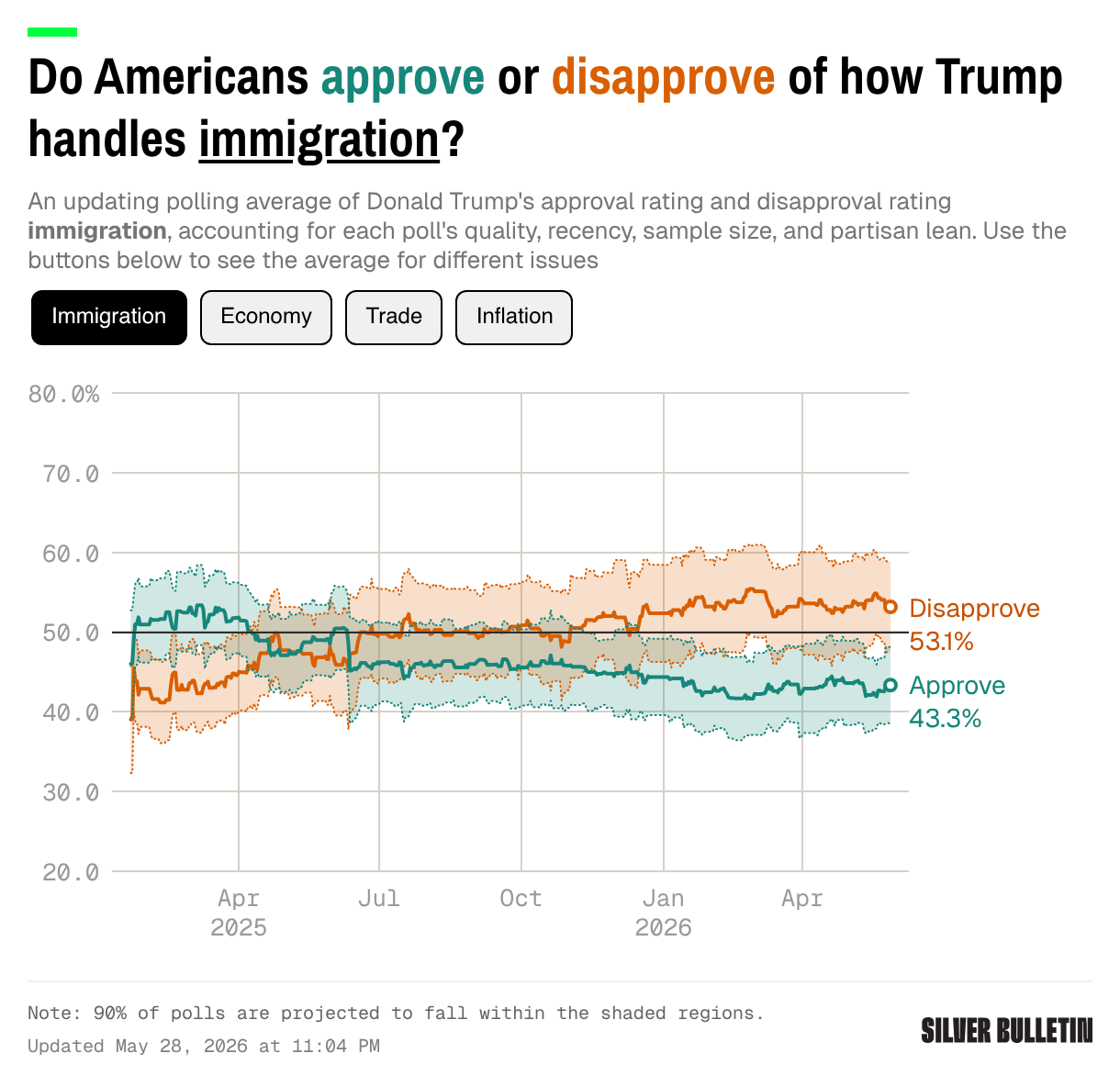
Even now—after Minneapolis, after two American citizens died for no very good reason, after the mainstream media ran every immigration sob story they could find (and then made up a few19 for good measure)—immigration is still Mr. Trump’s most popular issue!
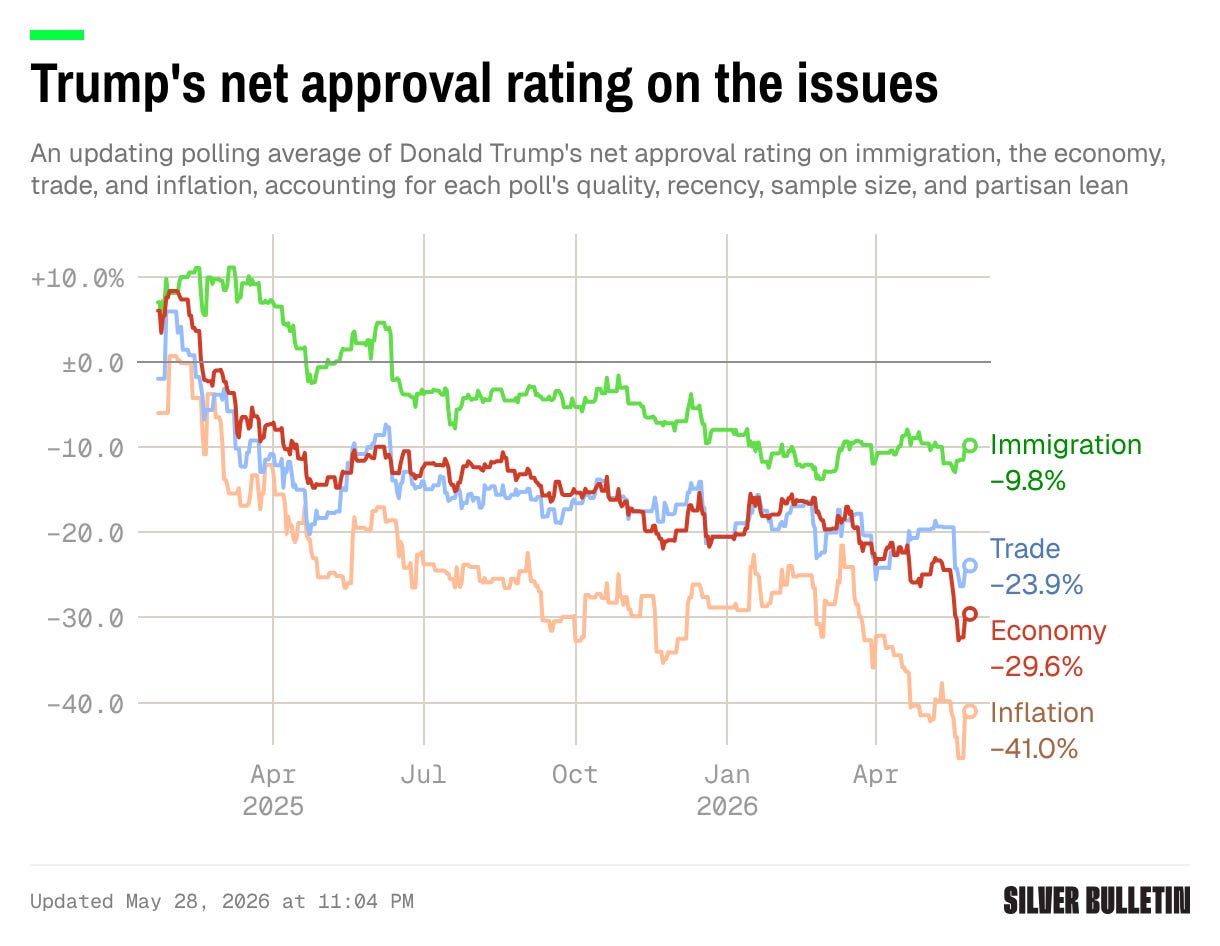
If Trump's immigration police have been slightly better trained; if his spokesmen had been a little more professional; if Mr. Trump himself had been a little less performatively cruel about deportations; and, above all, if Alex Pretti and Renee Good had not been killed… Trump's mass deportation policy would likely remain popular today.
Contrast this rather aggressive anti-immigrant attitude with how things felt in the 1990s. (Kids who don’t remember the 1990s: trust me on this.)
Immigration was a calm subject back then! Lots of people took it seriously, but the same way people take the budget deficit seriously: nerds cranked out reports, randos occasionally shouted angrily about it, elected officials frowned about it for the cameras, but nobody considered it existential, one way or the other.
I know there’s a risk that I’m looking back on the years of my childhood with rose-tinted glasses, but I don’t think I am. Things really seem to have changed.
In the ‘90s, immigration hardliners were cranks. Pat Buchanan was considered a radical in the 1990s, because he supported a border fence, a temporary moratorium on immigration, and ending birthright citizenship by constitutional amendment. This placed Buchanan well to the left of 2026 Donald Trump and today’s Republican mainstream. Yet Americans were so unmoved by his immigration rhetoric that he never broke 3% support.20 Buchanan’s final presidential run came in the year 2000, just as our foreign-born population hit the “warning zone.” In that race, Buchanan lost the California Reform Party primary to… a guy named Donald Trump.
However, the immigrant population is now double what it was in the early 1990s. It’s not surprising that its voters are (in the aggregate) feeling strained, nor that they are demanding stronger border protections and a much more aggressive deportation stance. It must be added: it’s also not racist for them to feel that way. (However, their resentment can develop into racism if the only people who respect their feelings are racists.)
Agree or disagree with the voters, like it or not, the American people have apparently made a collective judgment that it’s fine for 1-in-20 of our neighbors to be foreign-born, but that 1-in-7 justifies drastic measures against them.
It may be merely coincidence that this number has held so steady across so many decades. There are, once again, lots of variables, a blunt measuring tool, and changing circumstances. America’s learned capacity for immigrants could still grow (or shrink) and that could happen even in the next decade.
Still, I think it would be foolish not to take this as at least a starting point: to a first approximation, the American people collectively believe that America is capable of assimilating about 10% of its population at any given moment, and would prefer to keep it at about that level. 15% immigrants? Forget it. At that point, it seems, “America’s full.”
I wouldn’t have voted for this consensus myself, but I respect it.
Immigration touches different social classes in different regions very differently. Some, no doubt, are not negatively affected by immigration at all. Others suffer greatly from immigration. As an upper-middle-class white university graduate, the effect of immigration on me has been quite small, and much of it has been positive. Most immigrants I know graduated from American colleges. (I know more rich Saudis than poor Somalis.) Immigration is a strong part of my family history. This makes me think that America has a good bit of capacity to spare. Left to my own devices, I would speculate that America’s immigration capacity is closer to 20% than to 10%.
However, the beauty of voting is that it takes independent judgments from hundreds of millions of people, weights them appropriately, and averages them together. When we do that, it seems America collectively believes we already have a capacity problem, and have had one for nearly 20 years. Interestingly, this consensus seems to match up pretty well with the rest of the G7, where every country (except Canada) with an immigrant population over 10% finds itself stumbling drunkenly toward the nativist right.
I want to go back to the immigration politics and immigrant-welcoming atmosphere of the 1990s. I want happy, successful immigrants living free of fear in a country that considers them an asset, not a burden. I want to take the air out of the tires of America’s nativist agitators, including a certain odious individual who styles himself President of the United States.
I therefore want to lower the foreign-born population of the United States from 15% to 10%.
VII.
I am hesitant to continue, since brilliant diagnosticians often give horrendous prescriptions. The essay is certainly more than long enough, and Heaven knows I have poured enough hours and weeks into this difficult article to earn my De Civitate stipend. However, I have just said that the U.S. should “lower the foreign-born population,” and I’m worried someone who wants to open death camps will take what I’ve written as a justification for doing so. I therefore want to sketch what I think we should do—and, more importantly, what we shouldn’t do.
There are two ways to lower a country’s foreign-born population. First, the quick way: you can send people who are already here back home. (This could be by deportation, financial incentive, or other inducement.)
Second, the slow way: you can stop more people from getting in. (If you do, those who are already here will eventually die of old age, and your foreign-born population will fall.)
However, there are a number of legal and moral limits on these methods.
The Quick Way: Removal
Legal Immigrants
For starters, the United States has no moral right to remove people who are already here, permanently, if they came at our invitation. It would be a great sin to try to “denaturalize” and deport naturalized citizens, or even green-card holders, for no other reason than that we don’t want them here. (It would also violate our laws, and those laws have no chance of changing.)
If someone committed fraud on the citizenship application, fine, that’s different—but it’s also rare. Likewise, about 1% of the U.S. population are legal nonimmigrants here on temporary visas, such as the H1-B Specialty Worker visa or Temporary Protected Status. As soon as our temporary commitment to those residents has been fulfilled, we should thank them for their partnership and politely send nearly all of them home.21 However, our naturalized citizens are part of us now.
This very basic rule severely limits the pool of immigrants the U.S. can remove from the country. The foreign-born population of the United States is 15%, but a bit less than three-quarters of them are here legally, most as citizens and green-card holders.
Illegal Immigrants, In General
Of course, that means more than a quarter of the U.S.’s foreign-born population is not here at our invitation. They are illegal immigrants. This is unique among our G7 peers. For most countries in the G7, illegal immigrants make up only a single-digit share of the foreign-born population.22 The United States has a much larger illegal immigrant problem. If we sent every single one of them back to their nation of citizenship, that, by itself, would get our foreign-born population back down to about 11%. (10% if we also suspended our temporary nonimmigrant programs.)
In general, it is perfectly moral and legal to send an illegal immigrant home, for the same reason that it is perfectly moral and legal to evict a squatter who snuck into your house and has been living secretly in your attic. Even if the squatter is extremely polite (once caught) and offers to pay rent, you are under no moral or ethical obligation to accept his offer. (Doing so may be praiseworthy, if it does not impede your other obligations, but supererogatory.) By the same token, removing an illegal immigrant from the country is a perfectly rational and ethical policy response to someone who “jumped the line” and stole into our country.
This is also vital if we are to have immigration laws at all. If we pass a law saying, “No more than 10% immigrants,” but then we don’t remove people who break that law, the law is a nullity (and America will find itself exploring hitherto unknown levels of assimilation strain and nativist tensions). You cannot have speed limits without police officers. You cannot have insider trading laws without the Securities & Exchange Commission (or something like it). And you cannot have immigration laws without a lot of men with guns patrolling the border, investigating the interior, and sticking violators in detention while their cases are heard.23
I don’t care whether you call this force “ICE” or not. If we want to change the name (and even many of the personnel) because of the bad vibes that have developed over the past year, that’s fine.24 However, if you don’t believe there should be any police force to identify and remove immigration scofflaws, you don’t believe in immigration limits at all.
Indeed, given the immense size and scope of our illegal immigration problem (a scope unmatched in the OECD), I think it was entirely appropriate for the White House to ask Congress to dramatically expand ICE in 2025, and I support Big ICE until the illegal immigration problem is firmly under control.
That said, there are some exceptions to the general rule that you can send illegal immigrants home.
Innocent Illegal Immigrants
Consider a young person who was born in Madagascar and illegally immigrated to the United States as a baby. She has grown up here. She knows only our language and our culture. She has never taken French classes, much less Malagasy classes. She never consented to the crime of illegal entry, and her parents, ashamed, never even told her about her immigration status. She is now 33 years old, working as a nurse under a Social Security number she believes to be genuine, and is married to an American, with two American kids.
There can be no serious argument that, for all intents and purposes, this young woman’s homeland is the United States of America. Unfortunately, our law fails to reflect that, and instead prescribes that she should be shipped back to Madagascar when apprehended. This would be a serious injustice against her. The Catholic Church treats it as a sin to forcibly remove people from their homelands. We Americans, too, have a great love of individual ownership over our own lands and our own destinies. Banishment was once recognized as one of the law’s harshest penalties, reserved for some of the worst crimes; American law has never contemplated it. In a case like this, then, deportation would cause extreme harm to an individual who is innocent of any wrongdoing.25 Even if she were somehow guilty, it would still be disproportionate to inflict such serious harm over a misdemeanor offense. It would be an evil act.
There are, unfortunately, many such cases in the U.S. illegal immigrant population. Most are not quite as clear-cut as the hypothetical I’ve just given you, but it is clear enough that there are hundreds of thousands of people in this situation or something like it. They make up perhaps 1-2% of the overall U.S. population. Some have already been legally, but unjustly, deported.
The DREAM Act is intended to (eventually) give people in this situation citizenship, so people in this category are broadly referred to as DREAMers. The DREAM Act may be too broad in some respects, and thus may include some illegal immigrants who aren’t truly innocent, but that isn’t the reason the DREAM Act has failed to pass.
The DREAM Act has failed, again and again, because the nativist right refuses to pass legislation increasing the legal, foreign-born population—not even to prevent obvious injustices!—until it trusts that the overall foreign-born population is falling anyway.26 Since I would like to pass the DREAM Act, or something quite like it, I would like to lower the foreign-born population to 10% or so, since I believe that would enable the Act to finally pass Congress.
Illegal Immigrants of Absolute Necessity
By the same token, there are some illegal immigrants who came to the United States because they would have starved to death or been murdered or blown up by an ongoing civil war in their home countries.
I do not mean that they merely lived in much poorer conditions than one generally finds in the United States. I do not mean that they lived in proximity to violence which might have posed some danger to them, eventually. You don’t get to break another country’s law because you’d like to own a washing machine. I mean that they faced imminent threats to their life, liberty, or basic well-being.
Such immigrants should, in general, enter the U.S. through the legal asylum process (and can be held accountable for declining to do so). However, because the asylum system focuses on political persecution, immigrants facing other deadly threats did not always have access to the asylum process. They had no choice but to illegally immigrate somewhere.
Well, they had a choice: illegally immigrate, or die.
I believe strongly in our right to a border, but that doesn’t exceed anyone’s right to life. You might as well sentence a starving man to five years’ hard labor for stealing a loaf of bread, and we know how that ends. We should not deport such people.
Unlike the innocent illegal immigrants I described above, though, I do not think these cases are common. Indeed, one of the most pervasive and disappointing distortions on the pro-immigrant side of the “debate” (such as it is) is this common motte-and-bailey move: first, they claim (as I just did) that some people face threats so dire that their right to migrate cannot be justly hindered by any human power. (That’s the motte.) Second, the bailey: once you’ve agreed to this, they act as if every illegal immigrant who claims an economic motive for migration falls into this category, and can never be removed because they have a right to share in our wealth.
They don’t. The United States should have some law allowing these sorts of claims to be heard through the asylum process. For example, I am sympathetic to the view that the U.S. should hear out asylum claims from battered wives who believe the only way to escape their husband is to flee the country altogether.27 However, these cases are uncommon. The absolute poverty rate in the Western Hemisphere is quite low. The prevalence of gang violence, while unacceptably high, is not generally such that the mere presence of it justifies flight. We do not, as a matter of justice, owe American citizenship to every resident of Ecuador. Serious, justified claims are, I believe, uncommon.
Of course, if making claims about fear of persecution starts to look like a good way to get into the United States, many immigrants will claim a fear of persecution. Many claimants will be lying, and few will have the receipts to back it up. We must remember this at every stage of the asylum process.
Illegal Immigrants of Long Tenure
If the last category was narrow, this category is anything but.
I have said that it is evil to banish someone from their homeland—unless, perhaps, they have been convicted of one of the few crimes so serious that, in ancient times, it justified banishment. There is nothing wrong, of course, with using deportation to send someone back to their homeland.
But what if the land of their birth is no longer their homeland?
One’s homeland is not simply a few words on one’s birth certificate. We are tied down to the place we live in by family, community, culture, work, property, religion, and a thousand other thick ropes.
My father “immigrated” to Minnesota from Philadelphia. When he did so, he lost some ties immediately. Others began to weaken. He forged new bonds here. Bought a house, got a job, raised a family, cheered for the local sports teams, lost his accent, volunteered in the community, read the newspapers, did some potlucks, helped his neighbors, paid his taxes. I don’t know when it happened, exactly, but, at a certain point—perhaps ten or twenty years into his sojourn from Philly—my father’s homeland ceased to be over there. Now it’s here. For better or for worse, he is bound to the Twin Cities twenty times more powerfully than he was ever bound to Philadelphia. Of course, he still loves visiting his childhood neighborhood, but, when he goes home, he goes home here, to Minnesota. We have a concept in our law of “common-law marriage,” where two unrelated people become married, in the eyes of the law, simply by living together for a long time. My father is a common-law Minnesotan.
I find myself persuaded by Stephen Greydanus’s argument that the same is true of immigrants to our country… even illegal immigrants. Even illegal immigrants who knowingly violated our law in coming here, and who have been dodging deportation ever since. After they have been here for a long time, forging ties to our country, this becomes their homeland in fact, even if not in law—and it is wrong to deport someone from his homeland for any but the most serious crimes.
Greydanus mentions the case of Oscar Campos, a New Jerseyan who stole into our country illegally 40 years ago. Here, he met and married Humberta Campos (also an illegal immigrant). They ran a small business together, were active members of their parish, had three American children (ages 24, 22, and 15), owned a house, and had all the other attachments that come from living for many decades in the same place. They were apprehended and deported in December 2017, long before the current immigration enforcement surge. It seems to me that this was unjust. Yes, Oscar Campos knowingly violated our laws. Yes, he tried to evade the consequences. But he had assimilated into our society as a common-law American. Thus, deporting him was effectively a banishment. Even though he was guilty of a crime, it was still disproportionate to inflict such a harsh penalty for a misdemeanor offense.
I still think Campos (and those like him) ought to be punished, of course. First, they violated our laws. Second, they evaded punishment for decades. Third, in the zero-sum world of the national capacity for immigrants, they stole some legal immigrant’s place in the United States. Fourth, punishment is necessary not merely to redress the harm done by the illegal immigrant, but to deter future illegal immigration. If we allow illegal immigrants of long tenure to remain here (as, it seems to me, we must), then we are putting a neon sign on the border saying, “Come to America illegally! As long as you can get away with your crime for long enough, you’ll get to stay!” Only stern penalties, efficiently administered, can deter this.
Illegal entry carries a six-month prison sentence. Let Mr. Campos serve it. Garnish his wages, too, for a very long time, in repayment for the spot he took from a legal immigrant. Deny him full citizenship forever, because granting American citizenship to illegal immigrants would be the best possible way to encourage another wave of illegal immigration. Indeed, to deter future violations, the penalty faced by Campos and others like him may need to be harsher than the crime itself might suggest.
For all that, though, I believe it was morally wrong to rip Mr. Campos away from his adopted homeland and the life and family he had built here.
I think that principle extends to any illegal immigrant who remains here for at least (let’s say) twenty years. (Not just the model illegal immigrants, either.)
That’s quite a sizable number of illegal immigrants we can never remove.
Removal Without Deportation
I am, of course, a big fan of measures that do not forcibly banish people from the United States, but which simply make it less attractive for people to stay here illegally.
The federal government has a system called E-VERIFY that does a reasonably good job confirming the work authorization of new employees. We’ve had it for thirty years. However, we’ve never required employers to use it. E-VERIFY is optional! Naturally, the employers who are hiring (and exploiting!) large numbers of illegal immigrants aren’t about to voluntarily submit to a system specifically designed to prevent them from hiring (and exploiting!) those immigrants. We should make E-VERIFY mandatory. If illegal immigrants could not get jobs here, some of them would leave, and others would decide not to come here in the first place. E-VERIFY is not a panacea, but it would help, so we should implement it nationwide. I think the biggest tell that, for some people (I believe very few), this is all about being mean to brown people is that they never talk about E-VERIFY, nor about the Big Business interests that have prevented it from taking hold even amidst mass deportations.
In my view, birthright citizenship is clearly the law of the land. The 14th Amendment is pretty clear that anyone born here, living under our jurisdiction, is an American citizen. Tourists’ babies probably aren’t, but the 14th Amendment was pretty sweeping on this point. (Why shouldn’t it be? We had practically open borders in 1868!) Donald Trump’s claim to have repealed birthright citizenship by mere executive order was an offense to the Constitution, and I hope the Supreme Court crams it back down his throat later this month. However, I don’t think birthright citizenship is a actually very wise policy, and I would support efforts to amend the Constitution to prevent the children of illegal immigrants from automatically receiving U.S. citizenship. (Eventually, maybe, but not before their first birthday.) Birthright citizenship is a powerful attractor, because it means an illegal immigrant can give his children the life he wants for them, even if he is later caught and deported. Then it creates horrific messes when the parents are caught and deported, but their babies have U.S. citizenship. Let’s not do it anymore. Lots of other countries don’t have birthright citizenship.
These are just a couple of ways the U.S. could gently encourage illegal immigrants to leave without arresting them, putting them in shackles, and dragging them onto a plane. There are others.
It seems we have exhausted the supply of foreign-born persons in the United States whom we can’t deport. That still leaves lots of deportable people! However, even if we miraculously managed to deport all of them, we’d still have a foreign-born population well in excess of 10%.
That means we must also start refusing to allow more immigrants in.
The Slow Way: Not Letting People In
This is simple: when people ask to come to the United States, tell them, “Not yet. We’re full up right now.”
This is not particularly popular. Nor is it particularly fair. The process was already slow and convoluted for the people legally waiting their turn in line, and suspending the line for perhaps a decade or two would make it worse:
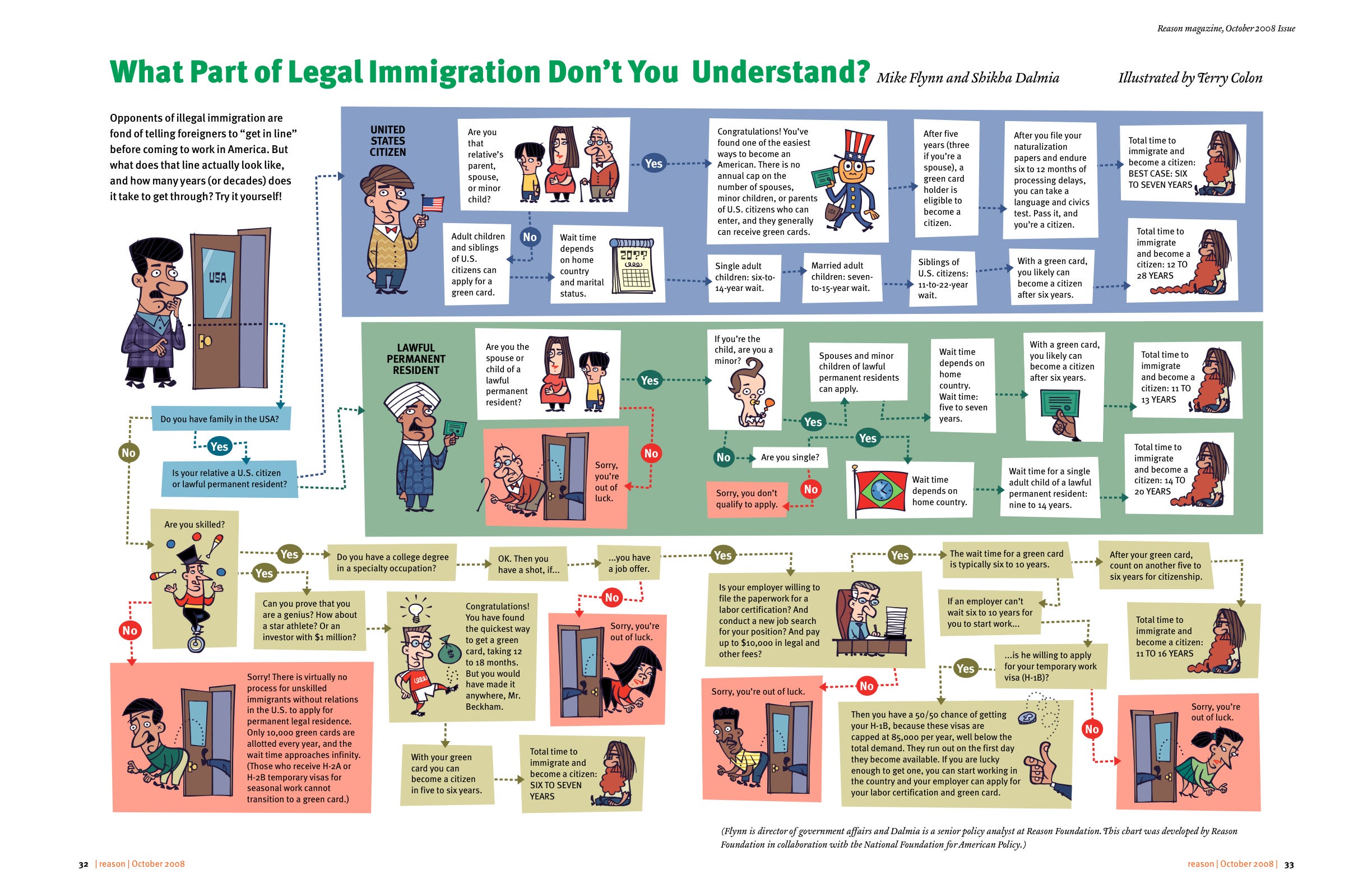
Nevertheless, if we are committed to bringing the U.S. immigrant population down to fit our apparent capacity to assimilate them, without doing serious injustices to those illegal immigrants already here, we don’t have a choice. The spots that would have been taken be legal immigrants have already been taken by illegal immigrants we can’t morally remove. They have been robbed, in a sense, of their chance to come to America, but not by the United States government. (This is another reason why penalties for illegal immigrants should be stern.)
In fact, this has already been happening. The amount of legal immigration to the United States has already shrunk (as a share of population) over the past quarter-century. Congress has a very hard time raising the legal visa caps when we’re flooded with illegals. The green-card lottery is already in such heavy demand that you can expect to wait approximately 70 years before winning it, aka never:
That means there isn’t a ton of slack available to cut in the legal immigration system. If it is correct that we don’t have the capacity to assimilate them all, then we have to reduce the total anyway, but it’s going to be difficult. We will be barring decent, sympathetic, hard-working people from coming to America, probably for a number of years. In many cases, we will be giving their spots to illegal immigrants who jumped the line.
Here’s a quick overview of the approximately 1.4 million people who legally immigrate to the United States each year, under normal28 circumstances:
To bring America’s foreign-born population down to 10% within the next 10-20 years, this total needs to fall by something close to half, in addition to the aggressive enforcement recommended above. That’s not going to be easy.
Refugees/Asylees
I’ll start with the obvious: we cannot turn aside refugees and those seeking political asylum. Some people on the Right look at people fleeing war zones and seem to ask, “Pah, am I my brother’s keeper?”
Well, yes, you are. Our obligation to love of neighbor does not end at the border, and it does not end if we have real problems of our own. The right to migrate is at its apex for people fleeing lethal danger. The Trump Administration’s decision to effectively terminate the U.S. refugee program is, therefore, gravely immoral:
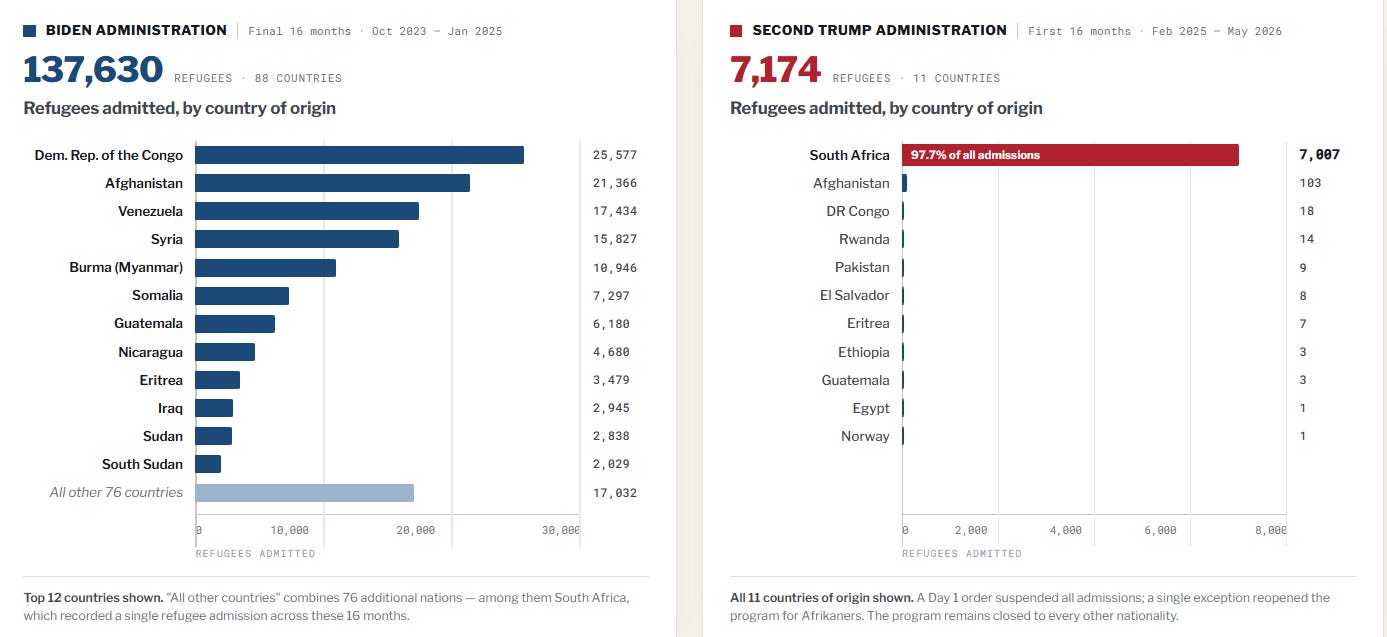
This is not to say that asylum/refugee processing is easy. It’s a mess. No interview, no matter how thorough, can cure the fact that your birth certificate and criminal records about you blew up when your war-torn nation’s Ministry of Records was bombed to rubble by the rebels. Many legitimate refugees and asylum-seekers will never be able to show hard proof that they absolutely require refuge. Fraudsters and terrorists realize this, and so they present themselves at the border claiming that they need refuge… “But, alas,” they say! Their birth certificates and criminal records blew up when their war-torn nation’s Ministry of Records was bombed to rubble by the rebels! Our system has many layers built into it to prevent the fakers from getting away with it, but there’s simply no level of “vetting” that can perfectly discern between the genuine needy and the liars taking advantage of our charity.
Indeed, it has become quite clear that, under the Obama/Biden Administration’s (very lax) standards for paroling asylum-seekers into the United States with a work permit and a far-future court date, it became the norm for economic migrants to just make up crap so they could get in on an asylum ticket, at least for a few decades until their cases were heard. Refugees are vetted through the United Nations before they even get to our system, but they have the same problems we have, plus some more.
Now, granting that we cannot turn asylum-seekers back to their home countries (because many of them really do need asylum), one obvious reform is that we should not immediately grant every person seeking asylum a pass into the U.S. mainland with a work permit. They should be detained while their case is processed and heard. If they are truly in need of asylum, three square meals a day in confinement beats the alternative. If they’re fraudsters, mandatory detention makes the option a lot less attractive. We should hire enough investigators and judges to ensure that asylum cases are completed in 3 to 6 months, so people fleeing catastrophe aren’t held in limbo indefinitely, but everyone should expect to spend some time in border detention when coming into America this way. This is actually the law already, but Presidents Obama and Biden did some shenanigans to short-circuit it, leaving President Trump in an awkward position (and leading Trump to come up with the Remain In Mexico program).
There also may be opportunities, in some cases, to redirect asylum-seekers and refugees to other countries. We owe them humanitarian aid and human decency. We do not owe them specifically American citizenship.
Nevertheless, on the whole, this category of legal immigration seems pretty close to intractable. We have to let ~200,000 refugees/asylees per year, and perhaps even more than that, if we want God’s continued blessings on these United States.
Iraqi/Afghan Allies
These immigrant visas are for Iraqis and Afghans who worked for the U.S. during the wars in Iraq and Afghanistan and their families, and who are now in danger of retaliation. They risked their lives for our troops, and now their lives are in danger. We owe them, period. I don’t know anyone who even questions this. I rather hope I never do! We can’t reduce these visas, although they will gradually fade away as the Iraq and Afghan wars fade into the past.
Employment-Based Immigration
These are immigrants who come over because of special talent and/or employer demand. In many respects, they are our “highest-value” immigrants, since they bring strong human capital and immediately contribute to growing our economy. However, they are also the immigrants who need to come here the least. We could axe this entire category without doing anyone an injustice.
Businesses would howl, but businesses notoriously abuse these categories to fluff their bottom lines and undercut American workers, so I wouldn’t pay much attention to them. In my field, computer science, you’re required to try to “hire American” before applying for lower-paid foreign talent, so there’s a whole cottage industry devoted to running deliberately failed job searches in America, by doing things like only posting the job in a small number of print newspapers and making the application process a mess. I am therefore unsympathetic.
We could certainly keep some employment-based migration, where the benefit is strongest, but you can reduce visas in this category with a clean conscience.
The Green-Card Lottery
Now called the “Diversity Lottery,” the purpose of the modern green-card lottery is to ensure greater diversity among our legal immigrants. Entry is restricted to countries that have sent low numbers of legal immigrants to the U.S. in the preceding five years.
Even if diversity ought to be an end in itself, no one would suffer an injustice from losing access to this lottery. I repeat: it takes the average entrant something like 70 years to win this lottery. Nobody’s counting on it. We could eliminate it without grave evil.
In fact, the current White House has done so! However, it did so illegally, without authorization from Congress, on the pretext of performing a “security review” after the suspect in the Brown University and MIT school shootings turned out to be a green-card lottery winner.29 The lottery will presumably return when the Democrats retake the White House in 2028 or 2032.
Family Migration
The largest category of legal immigration by far is family visas. As we saw above, in 2024, nearly two-thirds of all immigrants to the United States came in on a family connection.
This is good and praiseworthy. The family is the fundamental unit of society. In many ways, government only exists to support families. Families bring great benefits with them, too: they are a cohesive social network that can rely on one another in a strange country. They can help one another assimilate. They can support one another with child-rearing and build up the “little platoons” in a way that atomized individuals just can’t. We definitely want people in the U.S.A. to have their families with them!
However, we need to reduce legal immigration by half, and family migration is more than half of legal immigration. It is mathematically impossible to reach our goal without trimming family visas. So let’s take a look at them:
Kids need to be with their parents, and parents need to be with the kids who depend on them. Nobody needs anyone, just about, as much as children need their parents. We cannot morally keep U.S. citizens or permanent residents from reunification with their needy children.
It is not quite so critical for spouses to be together, but they are one another’s principal helpmate and (if things go as they should) eventual co-parent. To keep them apart forever would effectively divorce them. Therefore, reuniting spouses is, rightly, a high immigration priority, and this is a matter of justice. However, reunification need not be as swift as child reunification.
On the other hand, the remaining family-based immigration categories are very good, but they aren’t essential. We do not, in justice, owe it to new Americans to bring their entire families to America as well. My own immigrant great-great-grandmother sailed from Ireland and never saw any member of her family again. This was the norm at the time. It was a choice she and her family made.30 Parents are great, of course. My parents are among my best friends, and my greatest helps in life (outside my wife and kids). Yet their lives wouldn’t be ruined if we were separated the way my kids’ lives would be. It would not be a sin to cap parental visas, delaying family reunifications for a number of extra years.
Likewise the other categories, only moreso.
Summing Up
If we eliminated all legal immigration except these “essentials”—dependent children, spouses, refugees, asylees, and Iraqi/Afghani allies—legal immigration would fall to about 55% of current levels, right about where it needs to be to make our goal in the next 10-20 years or so. There are other approaches we could take to reach our target, but each increase in one category would need to be met by a decrease in another category, or we would have to accept a longer wait before reaching stability.
I would like to reach stability as soon as possible. After all, once our immigrant population stabilizes at the target (10% of the U.S. population), we would be able to open up the doors again to more people (as long as we kept our illegal immigration under control at the same time). These people want to become American, and that’s a terrific decision! I want to let them, ASAP!
VIII.
Perhaps you are saying, “Doing this sounds very hard. What if, instead, we just didn’t do any of these things? How about we return to the status quo ante Trump instead?” As far as I am able to tell, this is indeed the unofficial preferred policy of Pope Leo and the U.S. Catholic bishops. It is also, of course, the official policy of the Democratic Party, more or less. It allows us to be nice to everyone, and to feel good about ourselves doing it.
Unfortunately, history will not allow us to do that. If we return to the laws and policies that prevailed before Trump, the foreign-born population will resume its long rise, just as it did in the years leading up to Trump, and just as it did (sharply) during the Biden interregnum. The number is already at 15%, the highest level in American history. With every additional click of that winch, America’s assimilation capacity will come under greater strain. Ethnic and racial tensions will rise. More American communities will transform. More American natives will feel besieged in their homeland by foreign cultures and foreign norms. More Americans will blame immigrants for their job losses; some non-trivial number of them will be correct.
We were warned in 2007 that a backlash was building, and did nothing. In 2016, we saw the first form of that backlash, which was harsher than anyone in 2007 could have imagined. The backlash didn’t care so much about propriety as long as its problems were addressed. In 2025, as pressure continued to build, we saw the backlash evolve into a new and more brutal form, which was harsher than most people in 2016 imagined. The backlash now casually commits serious injustices against hundreds or thousands of people (alongside legitimate immigration enforcement), and seems to revel in the suffering it causes.
Do you even care to speculate what form the backlash takes if the American foreign-born population reaches 20%? 25%? 30%? If the wheels start to come off like they did in Oxford, or, indeed, in Rotherham? I don’t want to see that backlask, but you know who really doesn’t to see it? Immigrants!
People who want justice for immigrants have to get serious about showing how their proposals can square with a stable immigrant population, one that America’s existing institutions can assimilate. Pleading that nearly every would-be immigrant should be allowed to stay (“because what harm are they doing? they’re good people!”) and that every ICE arrest is a “kidnapping,” without addressing those foundational questions, only deepens the problem. We are still in a position where it is probably possible to bring America’s immigrant population down to historical levels without doing grave injustice to anyone. In a few more years, we won’t be! Do you think voters, by that point, are going to believe we have the “luxury” of sorting out right from wrong before adopting sweeping anti-immigrant policies?
I am deeply impressed by the moral conscience many of my friends have shown in the wake of serious injustices over the past twelve months. They have forced me to look squarely at cases I would have preferred not to see. They have made me always remember the human beings behind all these numbers. Their collective resistance to deportations, at least some of which were unjust, eventually forced the White House to back down on deportations, especially the unjust deportations. However, I am deeply unimpressed by their incuriosity about the bigger picture, by their unwillingness to articulate what a permanent solution might look like, and by their eagerness to fall for every lie perpetrated by a rage-bait radical. That won’t help immigrants, and it won’t help America. It will fuel the next, even worse, Trump.
I have, therefore, in a critical but sympathetic spirit, attempted to sketch one version of a permanent solution: aggressive but just deportation campaigns, combined with sharp cuts to legal immigration, until our immigrant population once again stabilizes at a level that the American people have, historically, considered acceptable. (I would give similar advice to European leaders, who face many of the same problems with much of the same popular backlash.)
If you have another idea for bringing America’s immigration capacity into line with America’s immigration burden, add it to the public conversation. Perhaps you have a brilliant idea for raising America’s capacity for assimilating immigrants to something more like Canada’s, and you know how to sell it to skeptical voters! Fantastic!
That is the conversation we should be having, instead of the slogans we’ve been slinging for the last twenty years.
We can do it.
DE CIV NEXT VOYAGE: This took much longer to write than I planned or hoped. It was supposed to be out by May 19, but I kept realizing that moves I thought were obvious actually needed to be explained. So I am behind on my publishing, and I apologize for that, but I hope this was worth the wait. I stuck with it specifically because I promised a break from my recent Catholicposting.
Next up will be some Catholicposting, as I post some translations in order to finish an elaborate dunk on the hapless Dilan Esper. Then, we’ll see, but I am well overdue for a Worthy Reads post and have about 30 articles collected that I think you should read. (I’ll curate that down to 5-8 as usual.)
It seems this was because of 1857’s Dred Scott decision, which purported to strike down the Missouri Compromise, and seemed to hint at a constitutional right to own slaves anywhere in the Union. The Supreme Court intended the decision to “settle” the slavery question, but, instead, it catapulted slavery to the top of the political agenda and ripped the nation apart. The Supreme Court’s attempts to “settle” questions outside its purview tend to have that effect.
The about-to-become-dominant Republican Party managed to contain America’s nativist element during the 1860s, since the Union relied on immigrant conscripts to win the Civil War, but, after the end of Reconstruction, nativists didn’t just return, but won a long string of major legislative victories:
The Page Act of 1875 banned Asian prostitutes from immigrating, and was enforced, effectively, as a ban on Asian women.
That same year, President Grant gave a major speech against allowing public money to flow to “sectarian” (a dog whistle for “Catholic”) schools, leading to a close-fought battle over an amendment to the Constitution to that effect. The federal effort failed, but most states passed “Blaine Amendments,” which were finally struck down by the Supreme Court in June 2020 as violating the First Amendment.
The Immigration Act of 1882 federalized immigration restrictions (which had previously been handled at the state level; h/t Tarb) and imposed taxes and exclusion powers to discourage immigration.
That same year, the Chinese Exclusion Act effectively banned all Chinese. (They already were barred from citizenship.)
The Scott Act of 1888 forbade Chinese who left the U.S. from returning, stranding thousands of Chinese laborers who were overseas at the time the law went into force.
The Immigration Act of 1891 strengthened the executive branch’s power to exclude and deport inadmissible immigrants without judicial review (a situation that persists today) and led to the opening of Ellis Island as an inspection and holding area for incoming immigrants under the Act’s more stringent inspection procedures.
The Geary Act of 1892 required legal Chinese residents to apply for, and carry at all times, immigration papers, on pain of deportation.
Formal bans on Japanese immigration were headed off in 1907 only because the Japanese Empire struck an informal agreement with President Teddy Roosevelt to… ban Japanese immigration.
In addition to deepening the bans on Asian immigration, the Immigration Act of 1917 imposed literacy tests on incoming immigrants.
The Emergency Quota Act of 1921 imposed hard numerical limits on the number of immigrants the United States would accept, with quotas for each nation of origin.
This only describes the nativists’ legislative victories. Their cultural effect was much broader. Consider, for example, the work of the anti-Catholic American Protective Association, a secret society which became a serious political force in the early 1890s:

Which still seems mild compared to the nasty stuff people at this time published about the Chinese:
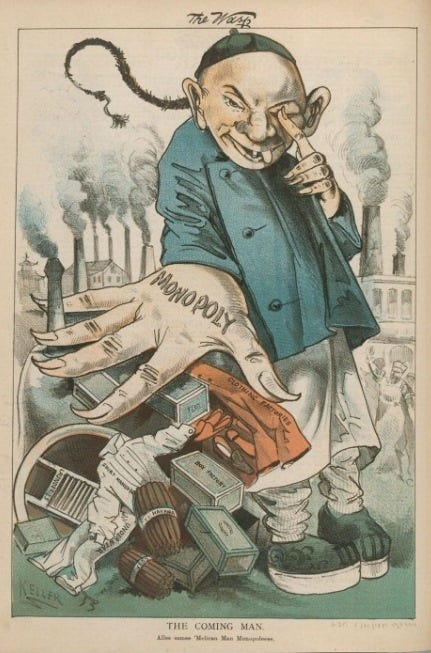
Nativists were also behind a number of riots and massacres. The Second Ku Klux Klan was keen on hating Blacks, but kept up a brisk side business in hating Catholics, Asians, and foreigners generally speaking.
As a child of the 1990s, all of this was perfectly unimaginable to me in 2005.
I’m not rejecting that claim, either. For our purposes today, it doesn’t matter if one culture is better than another, so we can avoid the question.
As home of a major internationally-renowned university, Oxford is quite a melting pot, with plenty of immigrants from the U.S. (2% of total population), Poland (1.5%), and China (1.5%). Statistically speaking, it’s unlikely that Oxford’s hijab problem is coming from them… although they will bring their own, different cultural frictions to Oxford.
Fortunately, as the home of a major university, Oxford also has a lot of social infrastructure in place to assimilate high levels of immigration, so Oxford can likely handle a lot more immigration than, say, Topeka. Unfortunately, if the hijab story is representative, then even Oxford, with all that social infrastructure, is struggling to assimilate its large immigrant population.
It’s possible they were Ethiopian. I am awful at identifying ethnicity. Not, like, the way people say at parties, “Oh, I’m bad at names,” but the way where I’ve taken calibrated tests that reliably show that my facial recognition is far below average. When I say I’m “mostly colorblind to race,” I mean it literally. However, I was later given to understand that the African-Americans in the park that night were mostly Somalian, not Ethiopian, so I’m assuming these girls were, too.
It is difficult to dig up reliable information from seven-year-old local crime stories, what with link rot and the local media’s omerta about the ethnicity of the perpetrators. However, I have worked out to my satisfaction, mostly from old Facebook comments, that the 2018 incident was caused by Somalis. The 2017 incident was evidently caused by black-skinned people (according to a video of the fighting that is no longer available), but I was not able to ascertain with any confidence whether they were Somalis (a recent immigrant group) or plain old assimilated American Black people (thus a case of homegrown crime).
By the way, no one is fooled by our institutions’ refusal to admit this. The comments after an incident are always just a joke now. The first comment is usually, “No description in the article, so it’s the usual perps?” and the second comment is “Yes,” followed by the third comment, “Those damn Scandinavian teens, always causing so much chaos and violence!” Indeed, the code of silence only makes people (including me) suspicious that they’re suppressing other immigrant issues we aren’t hearing about. This is not an ill-founded suspicion, given the U.K.’s long cover-up of the Rotherham Pakistani Rape Gangs. The desperate institutional attempt to avoid giving ammunition to racists, even at the cost of their credibility, is only making readers more racist. At least the racists will tell them what’s going on!
A narrow exception: American Indians who still live on the reservations are American citizens, but aren’t immigrants, and even American Indians who have left the reservations are only “immigrating” to mainstream America in a qualified sense.
Also, Black Americans by and large trace their ancestry to involuntary immigrants, slaves kidnapped or sold from their homelands. That is, technically, a form of immigration, but it’s not exactly Emma Lazarus.
The Catholic Church has a lot of practice doing moral reasoning, and the U.S. Bishops summarize Catholic teaching on immigration in three broad principles:
People have the right to migrate to sustain their lives and the lives of their families: “When a person cannot achieve a meaningful life in his or her own land, that person has the right to move.”
A country has the right to regulate its borders and to control immigration: “No country has the duty to receive so many immigrants that its social and economic life are jeopardized.”
A country must regulate its borders with justice and mercy: “A nation may not simply decide that it wants to provide for its own people and no others. A sincere commitment to the needs of all must prevail.”
This seems about right. Many people disagree about how to balance these principles under changing circumstances, but I think the only people who reject these principles outright are Internet weirdos like Objectivists, commies, and Hobbesians.
Heck, even your average racist will agree that people of other races have a right to migrate to protect their families! He’ll only insist that they don’t have a right to migrate here, because we’re currently beyond our capacity to assimilate people who have different colored skin.
Of course, the racist’s position that skin color matters is both silly and evil, but my point is that even he accepts these general principles.
My tongue-in-cheek answer to this is that no one has been fully assimilated into American society (and therefore uses up some fraction of our assimilation capacity) until they identify as White. All ethnic minorities start as the Other and end up identifying as White. It happened with the Irish, the Germans, the Italians, and the Poles. It is happening today with Hispanics, who increasingly identify as White in polling. It will happen someday with Asians. The “tipping point” when America becomes a “majority-minority” nation (desired by progressives, feared by racists), will be continually pushed back, and likely will never arrive, because our minorities will continue to integrate into the majority.
An arguable exception to this is Black Americans, who “immigrated” to America on slave ships in chains, spent centuries in slavery, and then spent the following century being actively rebuffed from assimilating into mainstream American society by racist policies promulgated by the people who were still mad their slaves had been taken away. Black Americans now have a very strong identity that must nevertheless be called “American,” because it isn’t from anywhere else.
Nor, as far as I can tell, anywhere else in the West.
Here’s one adjustment I think is reasonable. In fact, it’s so reasonable, I almost made it in the main body of the article before opting for simplicity:
European nations are relatively small and highly interconnected, with free movement and employment throughout most of the continent. Much of Germany’s “foreign-born” population comes from their EU neighbors, who already share much of the culture, often share a language, already bank in the local currency, have a similar climate, and already live under many of the same laws. Moving from, say, Italy to Germany is not as simple as moving from New York to Florida, but it is much simpler for both the immigrants and the hosts than moving from Somalia to Minnesota. It’s more like moving between states than immigrating to El Norte.
If we adjust for this (imperfectly) by excluding immigration within Europe’s free movement zone (or between the U.S. and Canada), we find:
Canada: 20% were born outside the U.S. or Canada
The U.S.: 15% were born outside the U.S. or Canada (down from 16% at the start of the second Trump Administration)
Germany: 14% were born outside the EU/EEA/UK
The U.K.: 10% were born outside the EU/UK
Italy: 9% were born outside outside the EU
France: 8% were born outside outside the EU/EEA/UK
Japan: 3% were born outside Japan (same as before)
(I measure EU/EEA/UK in some cases and EU only in other cases because different EU countries report different figures, so apples-to-apples comparison was not always possible).
By this count (imperfect, but all counts are imperfect), the U.S. already bears a heavier assimilation burden than all our European peers. Indeed, several very wealthy, very free European nations started seeing serious immigration-related strain in their political system even with immigrant populations still in the single digits! This perspective implies that the U.S. is better at receiving and assimilating immigrants compared to many of its peers—in some cases, substantially better! Given our history, that shouldn’t be surprising.
Meanwhile, I’d be remiss if I didn’t note that Lyman Stone argues that it is better to measure net inflows (the rate of incoming immigration) rather than current foreign-born population (the cumulative total of immigrants), since the latter is mostly priced-in immigration from decades ago and is much slower to respond to policy changes. I broadly recommend his article, which agrees with my views in some ways and disagrees with them in others, but is always defensible. Unfortunately, all the charts in Lyman’s article are gone, and my query to him on Twitter has gone unanswered. (He may have muted me years ago.) Link rot is a scourge.
I am using the European definition of “far-right” here, which, as far as I can tell, includes Mitt Romney.
There are plenty of countries (around 50) with foreign-born populations above 25%, some as high as 72% (!!), but these heavy-immigration countries tend to fall into a few categories:
Tiny countries, total population under 100,000, often sustained by tourism, like Aruba or Iceland.
Tiny countries, total population under 500,000, that are functionally a satellite of one or more much larger countries, like Vatican City (an enclave within Italy), Andorra (a tiny speck landlocked between France and Spain)
Autocratic Arab petrostates that import vast quantities of migrant/slave labor and keep them carefully repressed, like Saudi Arabia. (The tell is their very low proportion of female immigrants.) Turns out you can have a very high capacity for immigrants in a police state!
Summer homes / tourist sites / tax shelters for the super-rich, like Monaco
Some combination of the above, like the United Arab Emirates (the country that has Dubai), which is both a destination for the mega-rich and an autocratic slave-labor petrostate!
So there is no iron law that every country must experience serious immigration / assimilation strain when their foreign-born population slides into the 10-20% zone. Many manifestly don’t! However, large, free countries like those in the G7 seem to struggle.
Worse, there was no end in sight! People in 1854 had no way of knowing that the foreign-born population would soon stabilize at around 13-15% in the 1860s. Indeed, if not for the Civil War and the nativist legislation that peppered the next seventy years, immigration levels might not have stabilized!
In fact, the G8 Bill was so toxic among the GOP base that, for a long while, it appeared to have ruined Sen. Marco Rubio’s aspirations to higher office.
Even at the peak of his crackdown, Donald Trump’s White House was never on pace to remove more than maybe a third of our ~20-million-strong illegal alien population, even counting self-deportations.
To be fair, many voters took him seriously, but not literally, and then were very disappointed when it turned out he meant this one literally. (“Seriously, but not literally” was always a poor excuse.)
I am thinking particularly of the thoroughly scurrilous story that widely circulated about how two supposedly perfectly innocent U.S. citizens were tackled and arrested by ICE for no reason other than their skin color. There were weeks of protests at Target over an almost totally fictional story. It looks like nobody online has ever thoroughly debunked that story. I saved my notes, but I guess the moment has passed now.
However, there was also that story about the woman whose family was supposedly tear-gassed for no reason while they were trying to get home from a basketball game (false), the story about that elderly woman who was taken into custody for six hours just for exercising her right to protest (false), and the story about that guy named Mubashir who was supposedly detained “for no reason at all” for several hours even though he was a citizen (whom Mayor Jacob Frey trotted out as “proof” that ICE was violating constitutional rights of citizens) (false).
All complete bullcrap. Winter in the Twin Cities was a season of truthiness. This is not surprising, since truthiness has always preyed on self-righteousness.
Buchanan won almost 3 million votes in the 1992 Republican primaries, which was a respectable showing among the 12 million voters who cast votes in those primaries… but 104.4 million Americans voted in the general election that fall.
Now, credit where it’s due: the best Buchanan result I’m aware of is a 1996 CNN poll where the question was, if Buchanan won the Republican nomination, would you be more likely to vote for Clinton or Buchanan? Buchanan got around 37% of the vote in that poll.
…which put him 10 points behind Bob Dole, notoriously considered one of the most lackluster campaigners in modern history, and who lost to Clinton by nearly 10 points anyway.
Temporary Protected Status, in particular, has turned out to be something of a scam. TPS was created in 1990 in response to the troubling problem of people being sent home to obviously deadly situations, like recent earthquakes or major wars. A TPS visa allows someone from a country in crisis to live and work in the United States temporarily, until the acute crisis has passed and it’s reasonably safe to go home. For example, we granted TPS to Kuwaitis for one year after Iraq invaded and conquered Kuwait. (In the meantime, we liberated Kuwait.) Nice and clean.
However, soon enough, the pro-immigration establishment began abusing TPS, and not subtly. El Salvador had two disastrous earthquakes in early 2001, and El Salvadoreans received TPS. Twenty-five years later, they still have it. Somalia received TPS in 1991 due to the outbreak of the vicious Somali Civil War. It was never revoked (although Donald Trump started trying to revoke it in 2025, more than 30 years after it was established). Somalia has had TPS so long that the civil war currently going on in Somalia isn’t even the same civil war as the one that led them to get TPS in the first place! They had nearly a decade of relative stability in the middle! Likewise, Honduras got TPS in 1998 due to Hurricane Mitch. It was not terminated until more than 20 years later, by the Trump Administration, to howls of outrage about Trump’s “cruelty.”
TPS is for acute crisis. It is true that many people’s home countries suck. as furious as people got at then-President Trump for calling them “shithole countries,” a great deal of pro-immigration rhetoric is explicitly motivated by the recognition that lots of countries around the world are, well, shitholes. However, the bare fact that one’s home country sucks does not give one a human right to live permanently in the United States. TPS status was always clearly communicated to all concerned as temporary, the crises have in most cases long since passed or settled down, and the U.S. has fulfilled its commitment in both law and justice.
As we will soon see, I think TPS cases where recipients have been in the U.S. for decades present serious moral complications, but there’s an obvious answer to that: Congress should put a hard 7-year cap on TPS visas, so we never find ourselves in that situation again. If “Temporary” Protected Status ever needs to continue beyond seven years for any specific group, then we should be able to pass legislation explicitly converting that group to refugees, which would be a more honest accounting.
See Table 12 in “Measuring Irregular Migration,” a 2024 working paper by MIrreM.
Note that any immigration detention process necessarily involves either the detention of small children, or separating them from their parents and putting them into foster care. There was a deafening hue and cry over the famous photograph of 5-year-old Liam Ramos (the blue bunny hat boy) being detained (alongside his father), with people protesting, “Why are they detaining a child?! A five-year-old isn’t a threat to anyone! This is cruel for cruelty’s sake!”
This was tendentious and manipulative. His father was being detained. His mother, also an unauthorized immigrant, refused to take custody of Liam (because she—probably correctly—feared that she, too, would be detained). The government detained Liam because they couldn’t leave Liam on the street in a Minnesota winter, and everyone knows full well the same chorus of angry voices would have raged at an even higher volume if they had. The real complaint here was that Liam’s father was being detained at all. The boy was just a prop.
However, it was appropriate for Liam’s father to be detained. He was an unauthorized immigrant here on an asylum claim, subject by (prudent) statute to mandatory detention. (This body of statutes is contested.) His asylum claim (like many asylum claims made during the period when claiming asylum got you a free ticket into the U.S. interior) appears to have been quite thin. It was denied in March, and the entire family was ordered deported to their homes in Ecuador. They are appealing. In the meantime, a bizarrely unreasoned order given by Judge Fred Biery in January prohibits their detention, despite the statute.
People who say “Abolish ICE!” are usually quick to point out that ICE did not exist prior to 2003. This is true… but not in the way most of these people think.
ICE (Immigration & Customs Enforcement) was one of the products of the reorganization of INS (the Immigration & Naturalization Service). After the revelation that many of the 9/11 hijackers were in the United States on valid visas, and that INS had missed some red flags, President Bush and Congress came to believe that INS was too big and unwieldy. INS handled border patrol, interior immigration raids, and administration of all immigration visas and paperwork.
So Congress split INS into three agencies:
Customs & Border Patrol (CBP), which handled the border;
U.S. Citizenship and Immigration Services (USCIS), which handles paperwork for legal immigrants; and
Immigration & Customs Enforcement (ICE), which took on all of the INS’s old duties investigating and deporting immigrants from the interior of the United States.
All three were then reassigned from the Department of Justice to the new Department of Homeland Security.
So, yes, technically, ICE was created in 2003… but that was just a federal re-org. The federal government has performed all ICE’s functions, under one agency or another, since the late 19th century.
If, by, “Abolish ICE!” all you mean is to change the name and do another re-org, that’s fine. I can get down with that.
However, if, by, “Abolish ICE!” you mean, “Stop having a federal immigration police force,” you are making a truly radical proposal incompatible with regulated borders and restricted immigration. That’s fine. I disagree, but it’s a defensible position. I simply ask that you own it.
…except, perhaps, the notional “wrong” of trying to avoid having this injustice inflicted upon her!
Before you cast your stones at the nativists, remember that the nativist right did make a deal in the 1980s to immediately grant legal status to a large number of illegal immigrants in exchange for improved border controls and assurances that they would never be asked to pass another amnesty. The amnesty went through just fine, but, when it came time to implement the border controls, suddenly there were all sorts of obstacles. Immigrant populations continued to rise, and, not twenty years later, the nativist right was asked to pass another amnesty!
They’ve been burned. I understand where they’re coming from, even though I think their decision to use an ongoing injustice as a bargaining chip compounds the injustice, and makes them especially culpable for it. Trust is a more important currency in politics than most of today’s politicians seem to realize. Once spent, your ability to make deals falls off a cliff.
Current asylum law does not actually allow this. Some people have come up with convoluted legal explanations for why it secretly does allow this, and have used these wholly-imaginary loopholes to grant admission to huge number of otherwise-inadmissible migrants. These people are vandalizing the law against the will of Congress and the American people, and ought to be held to account. However, perhaps the law should, under some circumstances, allow what these vandals have tried to force it to allow.
i.e. not during covid and not during the Second Trump Administration.
To be sure, I would supplement with figures from the Second Trump Administration here if I could, but those figures have not yet been published. Government statistics usually lag reality by several years, and immigration stats are no exception.
As pretexts go, that’s a pretty good one! It’s still a pretext. You can’t repeal a program enacted by Congress without Congress.
Actually, they made the choice for Kate’s sister, but she died after they bought the ticket. Kate had expected to wave goodbye to her sister from their home in County Mayo, but instead suddenly found herself exiled from her homeland, on a ship bound for a strange country, with little more than the clothes on her back.
Life was hard in the past! They suffered it all, though, for our sakes.
Unfortunately I came to the same conclusion in the run up to the 2024 election. Going by history, we start to see negative impacts on the social order when immigration reaches somewhere around 10% foreign born. 7-10% is our sweetspot as a nation. I say unfortunately because all the remedies are awful.
A factor I think is also important is the 2nd generation citizen population. My mom is a 2nd generation citizen. Her mom came from Ireland as a young adult, and married a man who was a 2nd generation citizen whose parent's were from Ireland as well. My mom who was born and raised in the US has had a strong affinity for Ireland her whole life and a corresponding lack of attraction to the US. She was raised in a Irish ghetto, considers herself Irish enough to seek out and obtain citizenship, and has a large in-group bias towards the Irish and other people of Irish decent. She tries to convince me to get Irish citizenship every few months and doesn't understand my resistance to the very idea. *I* am American.
I think there is probably a limit to 2nd generation citizens as well, though that data will be harder to suss out. That might be what we see with Canada as well - I suspect Canada has fewer second generation citizens but more first generation citizens. The rule might be something like "Less than 1/3 of the population must be a first or second generation immigrant."
Though I don't think the picture is quite so rosy in Canada. They seemed poised to elect a "far right" candidate up until Trump started talking about annexing Alberta and then support tanked for anything associated with the right.
Another aspect is that 10% across the country could still be close to 30-50% in a specific small town. If there is more of an effort to funnel immigration evenly that might work as well as reducing the immigrant population This means intentionally breaking up refugee groups when resettling, among other things which might be unsavory to people but it is the kind of thing that would also possibly increase the rate of integration and increase the overall amount of immigrants we could take in.
Regarding E-verify, from my understanding, employers are legally required to accept any "reasonably genuine" documents that appear to relate to the employee, even if they are not ultimately confirmed by e-verify. Employers cannot terminate an employee simply because they believe they are an illegal immigrant. Doing so may result in anti-discrimination lawsuits against the employer and then the immigrant receives protection from deportation for up to 6 years.
From https://legalaidatwork.org/factsheet/employment-rights-of-undocumented-workers/ :
"“Deferred Action for Labor Enforcement” (DALE) is a temporary immigration status meant to encourage workers to report employers’ unlawful practices without fear of retaliation, including threats of deportation. DALE, if granted, is a commitment from DHS to protect its recipient from deportation for four years, with a possibility to renew that protection for an additional two years. During this time, a DALE recipient is considered to be lawfully present in the United States and is able to apply for work authorization. It is important to understand, however, that DALE is only a temporary protection that does not offer any pathways to a permanent legal status in the U.S. Also, applying for DALE does notify DHS that you are in the United States, with the possibility that DHS could try to deport you after your legal status expires. We strongly recommend consulting with an immigration attorney before requesting DALE."
Maybe I received bad information regarding this but it sounds like the problem might not be entirely on the corporations but at least some of the blame lies on our litigious society.
I disagree that just because someone evaded the law for long enough they should automatically receive amnesty. Statue of limitations are due to evidentiary difficulties, not because there's some moral right to avoid punishment for wrongdoing if you're good enough at it. If the idea is that immigration crimes are simply unimportant, mere clerical errors, I think the existence of this post is sufficient to demonstrate that this is not the case. Illegal immigration can bring a nation to her knees.
Though I guess we do have precedent for a statue of limitations and for that alone we have room to argue that people who have been here for a decade+ should have standing to remain. Unless they have warrants out on them or were otherwise told to get out in a reasonable time frame from their entry.
Another solution is to increase birth rates of later-generation Americans, though no one really knows how to do this.
Nice article, I too live in MN and have noticed much the same things. I am a centrist, but who is pretty radical on immigration (and think it has been *the issue* since at least 2013. I seems like one of those things where if the Dems had caved to the right's concerns a bit back then, Trump doesn't get elected either time) in part because I was so sick of NPR/MPR totally soft-pedaling the issue. really one of the things that "red-pilled" me.
Both my wife and I (she is much more a progressive than me) have been talking about this sort of thing since our college days 20+ years ago, and how the danger zone in the US is around 14%. And here we are...
One of the biggest places all this friction plays out is schools. Radicalizes a lot of parents. At my kids (pretty good) inner city public schools, where there were very few problems of any sort, one of the Somali 4th graders was bringing a knife to school and shaking down the other 4th graders for money and another 5th grader was stealing things from students and the school in an almost organized crime manner. Breaking into locked areas with tools and such for months, and stealing in bulk.
Just a little local anecdote that underlines the kind of friction this creates. I am a bit involved in Dem politics and very involved in youth sports. I was at a Dem event where the elected official's staff member doesn't know that, and tells me about how they hate sport parents and can't wait to gut the youth sports budget because that is "white people shit" (note almost everyone in this conversation except the elected official is white because this is a fundraiser). They say they will support some sports the PoC kids like (namely soccer), but basically white people don't need anything from government and their culture doesn't matter.
I gently point out that actually my family is very involved in this sort of thing, and a lot of people value it a lot. And exactly this type of behavior is what turns the existing population against immigrants, and they just sheepishly changed the subject.
Nice to hear what they really think. Didn't donate any more money to that dude.